Few places in Eugene ask more of people driving than the streets around the University of Oregon. Between classes, thousands of students, faculty, staff, and visitors walk, bike, and roll across Franklin Boulevard, Agate Street, and the neighborhoods surrounding campus. On game days and move-in weekends, those numbers grow even larger.
For anyone driving near the University of Oregon, reaching your destination is only part of the job. The other part is protecting the people around you, and that takes awareness, patience, and current knowledge of Oregon law.
This guide covers the University of Oregon campus traffic rules motorists should know, including crosswalk laws, bike lane awareness, and right-of-way at busy intersections. It also explains how free, ODOT-funded training from Oregon Friendly Driver helps people driving in Eugene build the confidence to protect vulnerable road users on campus-area streets.
Why Campus-Area Streets Call for Extra Care
The blocks around the University of Oregon bring together almost every situation that challenges people driving:
- Dense student housing and frequent crosswalks
- Protected and painted bike lanes
- EmX buses along Franklin Boulevard
- Steady micro-mobility traffic, including e-scooters, e-bikes, e-skateboards, one-wheeled devices, and more
- People using wheelchairs and other mobility devices
Many of the people traveling here are new to Eugene, heading to class, or making their way home after dark during the rainy fall and winter months.
Conditions also change by the hour. A quiet street at 9:55 a.m. can be full of people walking by 10:00 a.m. when classes let out. Habits formed on highways or suburban roads don’t always prepare people driving for that pace of change. The stakes are real: Oregon recorded 482 traffic fatalities in 2025, and many of those crashes were preventable.
The OFD Course is a free training that goes beyond standard driver education, built to close the gap between general driving experience and the awareness that campus-area streets call for. If you live, work, or commute in the area, our free road safety course in Eugene covers local scenarios like these in detail. With that context in mind, the first rules to understand are Oregon’s crosswalk laws.
Eugene Pedestrian Crosswalk Law: What People Driving Need to Know
When it comes to Eugene pedestrian crosswalk law, the rules come from Oregon state statute. They protect people walking more strongly than many people driving realize.
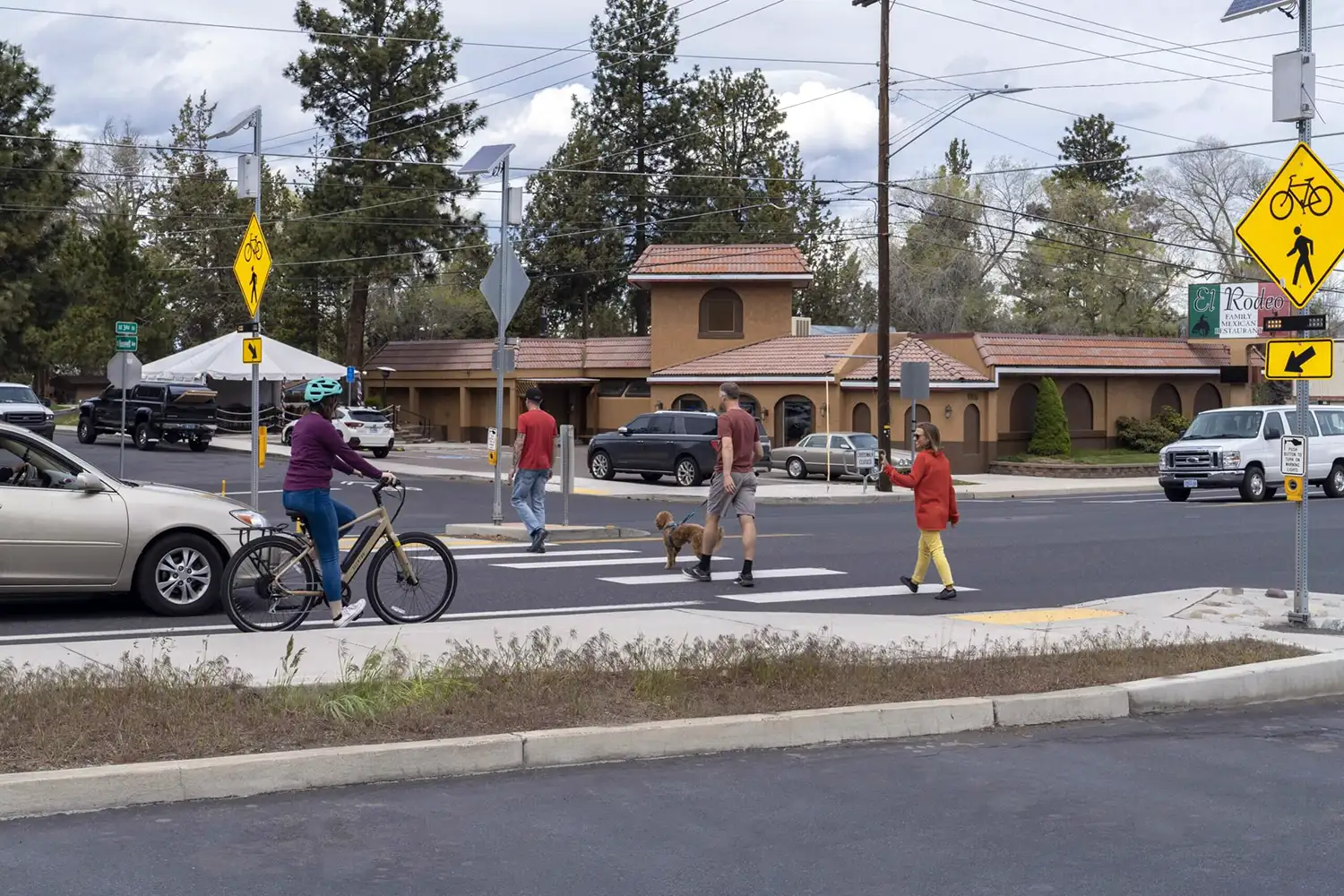
Every intersection is a crosswalk. In Oregon, a crosswalk exists at every intersection, whether or not it has painted lines. A person waiting at the corner of a quiet residential street near campus has the same legal protection as someone in a marked crosswalk on Franklin Boulevard.
Stop and stay stopped. When a person shows intent to cross at a crosswalk, you must stop and stay stopped until they have cleared your lane and the lane next to yours. If the person is blind or low-vision, with a guide dog or white cane, you must remain stopped until they completely cross the road.
Never pass a vehicle stopped at a crosswalk. If the car in the next lane has stopped at a crosswalk, assume someone is crossing in front of it. Passing that vehicle can lead toaserious crashes involving people walking.
Give extra care to people who are blind or have low vision. Oregon law gives the right-of-way to a person using a white cane or guide dog, whether or not they are at a crosswalk. Stop and wait patiently to ensure they can safely cross the street..
Watch for people crossing between intersections. Near student housing, parks, and building entrances, people often cross mid-block. Scan sidewalks and the spaces between parked cars ahead so you have time to respond.
If you want to know more, our guide on right-of-way rules for people walking explains Oregon’s crosswalk laws in depth. People walking are only part of the picture, though. Campus streets also carry some of the busiest bike traffic in the state.
Bike Lane Awareness Near Campus
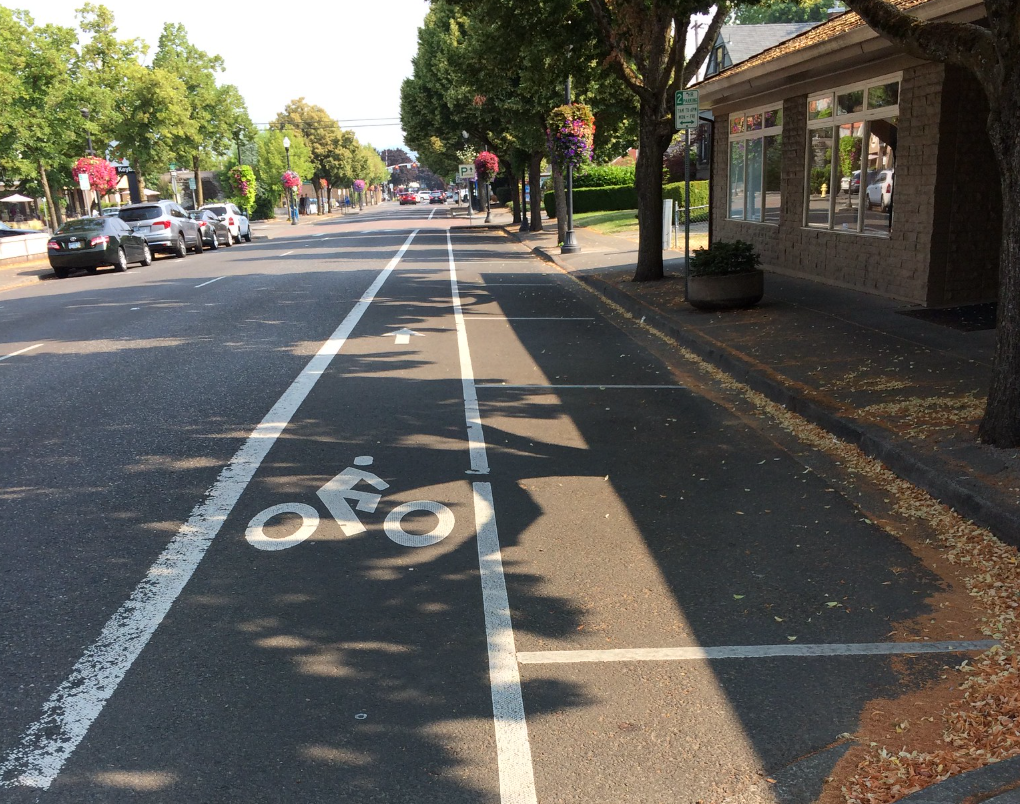
Eugene has a strong biking culture, and the streets around the university reflect it. The protected bikeway on Alder Street, painted bike lanes, and green conflict markings at intersections all help keep people biking visible. Infrastructure is only part of the solution, though. It works best alongside awareness and education for the people driving next to it.
Watch for the right hook. One of the most common crashes between people driving and people biking happens when someone driving turns right across a bike lane. Oregon law requires you to yield to anyone in the bike lane before turning. To turn safely:
- Check your mirror.
- Look over your shoulder and check your blind spots.
- Let the person biking pass before you turn.
Give space when passing. When passing a person on a bike, you should provide Fall Distance, which is the amount of space a rider needs in case they should fall. Fall Distance is required by Oregon law on any road greater than 35 MPH, but whenever possible, follow this standard for safety. The easiest way to leave the fall distance is by changing lanes, which often means waiting patiently until you can move fully into the next lane.
Look before opening your door. When parking along campus streets, use the “Dutch Reach” when opening your car door. By opening your car door with your far hand, it forces you to check behind you to avoid opening your door into the path of an oncoming person on a bike.
Anticipate micro-mobility. E-scooters and e-bikes often travel faster than people driving expect. Watch for them at side streets, driveways, and gaps between parked cars.
Many of these points appear on our list of common driver mistakes in Oregon. The Oregon Friendly Driver Course walks through each scenario with real-world examples. That way, protecting vulnerable road users becomes second nature. Knowing how to respond to people walking and biking leads naturally to the next skill: handling right-of-way at campus intersections.
Bicycle Safety and the Far Hand Reach
Right-of-Way Rules at Campus Intersections
Intersections around the university can be busy and tight, with people traveling in many different ways at once. Predictable, courteous driving helps everyone move safely.
- Come to a full stop at every stop sign. Use that pause to check crosswalks and bike lanes in every direction, not just for other vehicles.
- At four-way stops, the first vehicle to arrive goes first. If two arrive at the same time, the vehicle on the right has priority.
- Stop for people waiting to cross the street.
- Follow all no-turn-on-red signs. Where right turns on red are allowed, stop completely and yield to anyone in the crosswalk or bike lane first.
- Yield to buses re-entering traffic. Oregon law requires people driving to yield to transit buses signaling to pull back into traffic. This comes up often along the EmX route on Franklin Boulevard.
- Signal early. An early turn signal gives people walking and biking time to anticipate your next move.
These rules are simple on paper but harder to follow when traffic surges. That’s why timing matters just as much as technique near campus.
Plan Ahead for Peak Times and Conditions
Many of the busiest moments near campus are predictable, and planning for them makes a real difference.
Class change periods. Large groups of people walking and biking appear within minutes of the hour. Slow down and allow extra time.
School-day mornings and afternoons. The neighborhoods around campus are also home to K–12 schools. Watch for all students walking and biking, including bike buses: groups of students riding to school together with an adult leader, which can sometimes grow to 100 riders or more.
Game days and major events. Football at Autzen Stadium, track meets at Hayward Field, and events at Matthew Knight Arena bring heavier traffic, road closures, and visitors who are new to the area. Check event schedules before you head out.
Move-in and graduation weekends. Families unloading cars, new students learning their way around, and people driving unfamiliar streets all arrive at once.
Dark, rainy evenings. From fall through spring, early sunsets and Eugene’s rain reduce visibility and increase stopping distances. Slow down, use your headlights, and scan carefully for people at crosswalks and along the roadside.
Distractions. Set your GPS and music before driving. Even using hands-free options is very dangerous on roadways. Remember, your phone can wait; don’t risk the potential for fatal crashes.
In every situation, maintain a speed that allows you to anticipate and safely respond to people walking, biking, or entering the roadway, even if that’s below the posted limit. If driving in busy areas feels stressful, these tips for building driving confidence can help. Everyone driving near campus faces these conditions, but some people have especially good reasons to prepare.
Who Should Prepare for Campus-Area Driving
- Bringing a car to Eugene for the first time? Go beyond driver education with resources for new and young drivers.
- Are you a parent or caregiver dropping off a student or helping your teen practice? Lead by example and teach safety from the passenger seat.
- Visiting for a game day or campus tour? Learn to drive like a local with resources for visitors and tourists.
- Driving a delivery or commercial vehicle near campus? Build credibility through guidance for professional and commercial drivers.
- Do your Eugene employees drive for work? Support safe roads and safe workplaces through team safety training options.
Whatever brings you to campus, the habits you build here don’t stay in Eugene.
From Campus Streets to Communities Across Oregon
Every term, students head home for breaks, families drive in from across the state for move-in and graduation, and fans travel to Eugene for game days. The safe habits people practice near the University of Oregon travel with them.
When you stop fully at a crosswalk on Franklin Boulevard, it carries over to the school zone in your hometown. The same goes for checking your mirror before turning across the bike lane on Alder Street, which becomes routine on the streets you drive every day. Teens learning to drive notice these habits too, especially when they come from the parents and caregivers they ride with.
Courteous driving spreads, and many people who complete the course encourage friends, roommates, family, and coworkers to take it too. Together, they help build a culture of safety for people walking, biking, and rolling in communities across Oregon, including:
- Benton County: Corvallis
- Deschutes County: Bend
- Douglas County: Roseburg
- Jackson County: Medford and Jacksonville
- Klamath County: Klamath Falls
- Lane County: Eugene, Springfield, and Junction City
- Marion County: Salem and Jefferson
- Multnomah County: Portland Metro
Wherever your drive begins or ends, a few questions about campus-area driving come up again and again.
Make Every Drive Past Campus a Safer One
The student biking to an early class on Alder Street. The family crossing Franklin Boulevard on game day. The person using a wheelchair at a crosswalk near student housing. Each of them depends on people driving in Eugene to show up informed, patient, and aware.
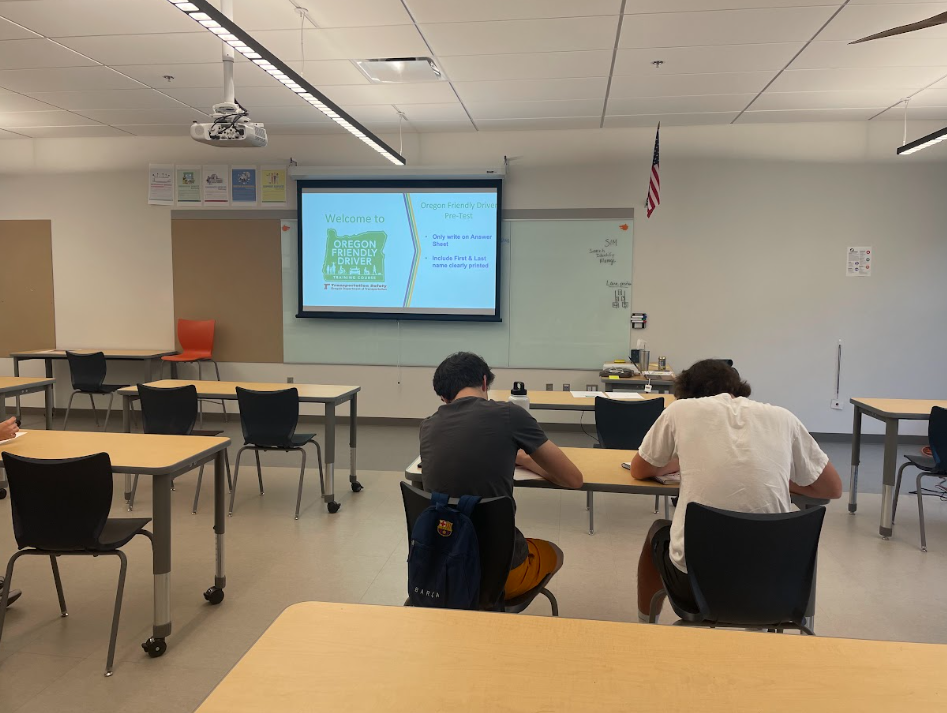
Enroll now in the free OFD Course online. The self-paced course takes about 75 minutes and ends with a digital certificate. You may also qualify for insurance discounts once verified through ODOT.
Leading a team, student group, or organization? Schedule a free in-person training or live webinar for your group. In Eugene, classes are presented by local partner Safe Lane Transportation Coalition. In-person sessions and live webinars run 60 to 90 minutes, and in-person sessions require a minimum of five participants.
Education for People-Centered Roadways.
Frequently Asked Questions
Do I have to stop for someone waiting at an unmarked crosswalk near campus?
Yes. Under Oregon law, every intersection is a crosswalk, marked or not. If someone is crossing at an intersection, you must stop and let them pass.
Can I turn right while someone is still crossing on the far side of the street?
It depends on where they are. When turning right, you must stay stopped until the person has cleared your lane and six feet of the adjacent lane. On narrow two-lane streets near campus, that usually means waiting until they have almost finished crossing.
How do I turn safely across the protected bike lane on Alder Street or similar bikeways?
Follow these steps:
- Slow down well before the turn.
- Check your mirror and look over your shoulder for people biking.
- Pay attention to the green conflict markings.
- Yield to anyone in or approaching the bike lane, coming from both directions.
- Turn only when the bike lane is clear.
What should I expect when driving near campus on game days?
Expect road closures, heavy foot traffic, and rideshare pickups. Many people driving will also be unfamiliar with Eugene. Check event schedules in advance, allow extra travel time, and watch for large groups crossing near Autzen Stadium, Hayward Field, and Matthew Knight Arena.
I’m a UO student licensed in another state. Should I learn Oregon’s rules?
Yes. Oregon’s crosswalk, bike lane, and passing laws may differ from those in your home state. The Oregon Friendly Driver course covers these laws in about 75 minutes online at no cost. It goes beyond what standard driver education courses cover, and it’s available to anyone driving anywhere in Oregon.
Oregon Friendly Driver is funded by the Oregon Dept. of Transportation and administered by Commute Options. Learn more at www.OregonFriendlyDriver.org.