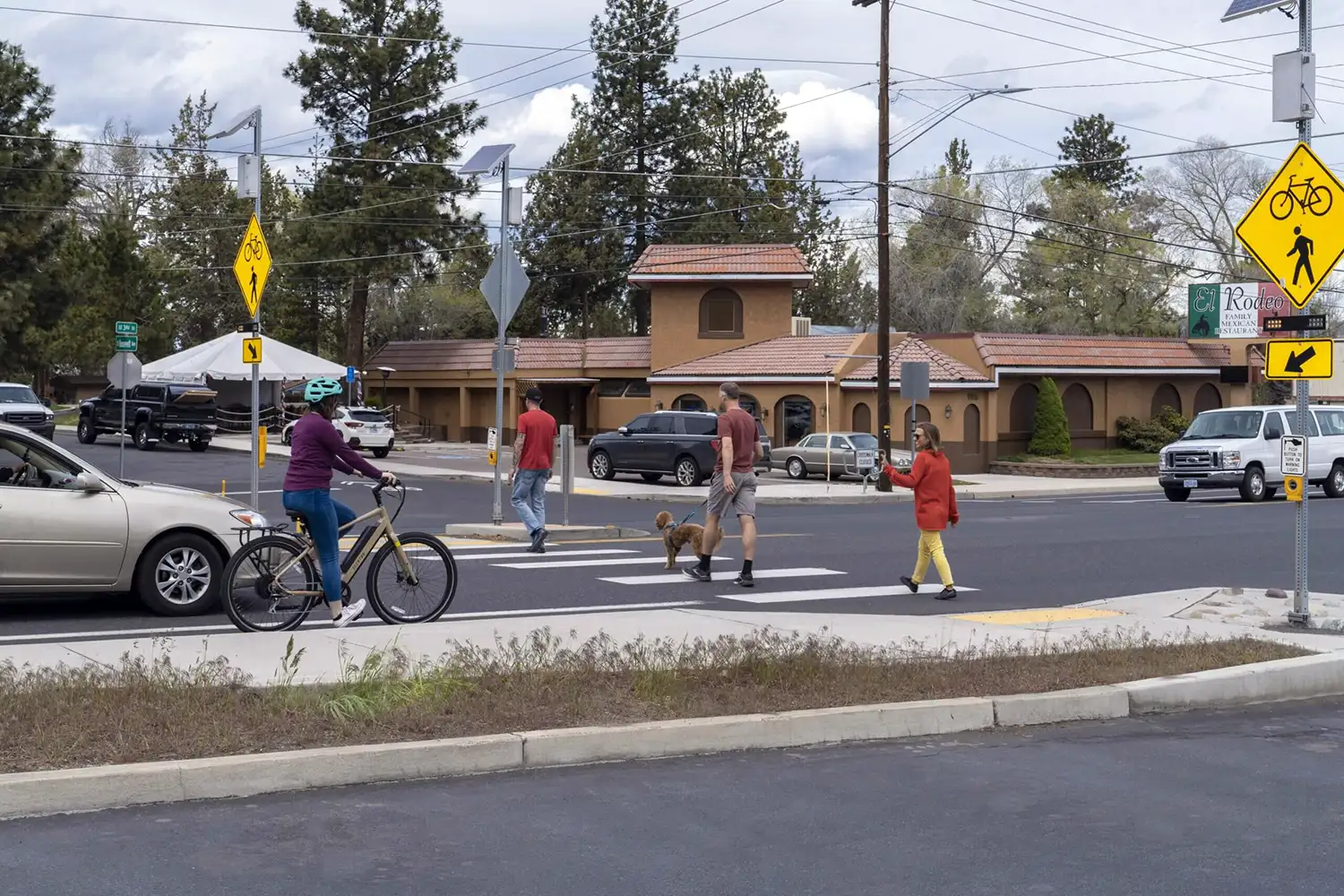
Walking somewhere in Oregon should feel simple. Then you’re standing at a curb, unsure whether the driver approaching actually sees you or intends to stop. For people driving, that same moment raises a different question: when, exactly, are you legally required to yield?
Oregon’s laws are clear on paper, but they’re widely misunderstood in practice, and that gap is where crashes happen. This guide breaks down the Oregon pedestrian right of way rules every driver should know, plus the situations where extra caution matters most for the people walking, biking, and rolling around you.
Understanding the Right of Way in Oregon
Every Intersection Counts as a Crosswalk
Here’s the fact most drivers don’t know: every intersection in Oregon is legally a crosswalk, whether it’s painted or not (ORS 801.220). That unmarked corner near your neighborhood, the quiet intersection with no lines at all, follows the same right-of-way rules as a signal-controlled crossing downtown.
Oregon law also casts a wide net over who these protections cover:
- Anyone on foot
- People using wheelchairs
- Someone momentarily off a bike
- People using mobility devices like walkers or crutches (ORS 801.385)
When the Right of Way Actually Kicks In
Under crosswalk laws in Oregon, drivers must stop and remain stopped once someone has entered the crosswalk with the intent to cross. That right of way is triggered the moment any part of their body, wheelchair, cane, or bicycle moves into the crossing (ORS 811.028). You don’t need to wait for someone to be fully in your lane to be legally required to stop.
That right of way comes with shared responsibility, though. People walking also have a responsibility to cross safely and use caution (ORS 811.028(4)). Understanding both sides of that equation is where confusion and risk are reduced.
What Drivers Need to Know at Crosswalks
Knowing Oregon’s crosswalk laws in theory is one thing. Applying them at a real intersection, in real traffic, is another. A few rules trip up even experienced drivers:
- You must stop and stay stopped until the person has cleared your lane and the lane next to it, not just the lane directly in front of your vehicle.
- Passing a car that has already stopped for someone in a crosswalk is illegal in Oregon, not just discourteous. It can put that person directly in your path with no warning.
- On multi-lane roads, stop back roughly 30 feet from the crosswalk when yielding. It preserves sightlines for the driver in the next lane over, who may not see the person crossing until it’s too late.
- Never stop your vehicle in a way that blocks the crosswalk itself, even briefly at a red light. It forces people walking into the traffic lane to get around you.
- Oregon law requires drivers to stop for anyone using a white cane or guide dog while crossing, in any crosswalk, marked or unmarked, regardless of signals (ORS 811.035).
- Drivers must yield to people on sidewalks, especially when exiting a driveway, alley, or parking lot (ORS 811.025), a scenario where people walking often appear with little notice.
Good habits here are simple: scan crosswalk zones well before you reach them, slow down as you approach intersections, and make eye contact when you can to confirm someone has seen you stop. These habits matter everywhere, but they matter most in the areas covered next.
Where Extra Caution Matters Most
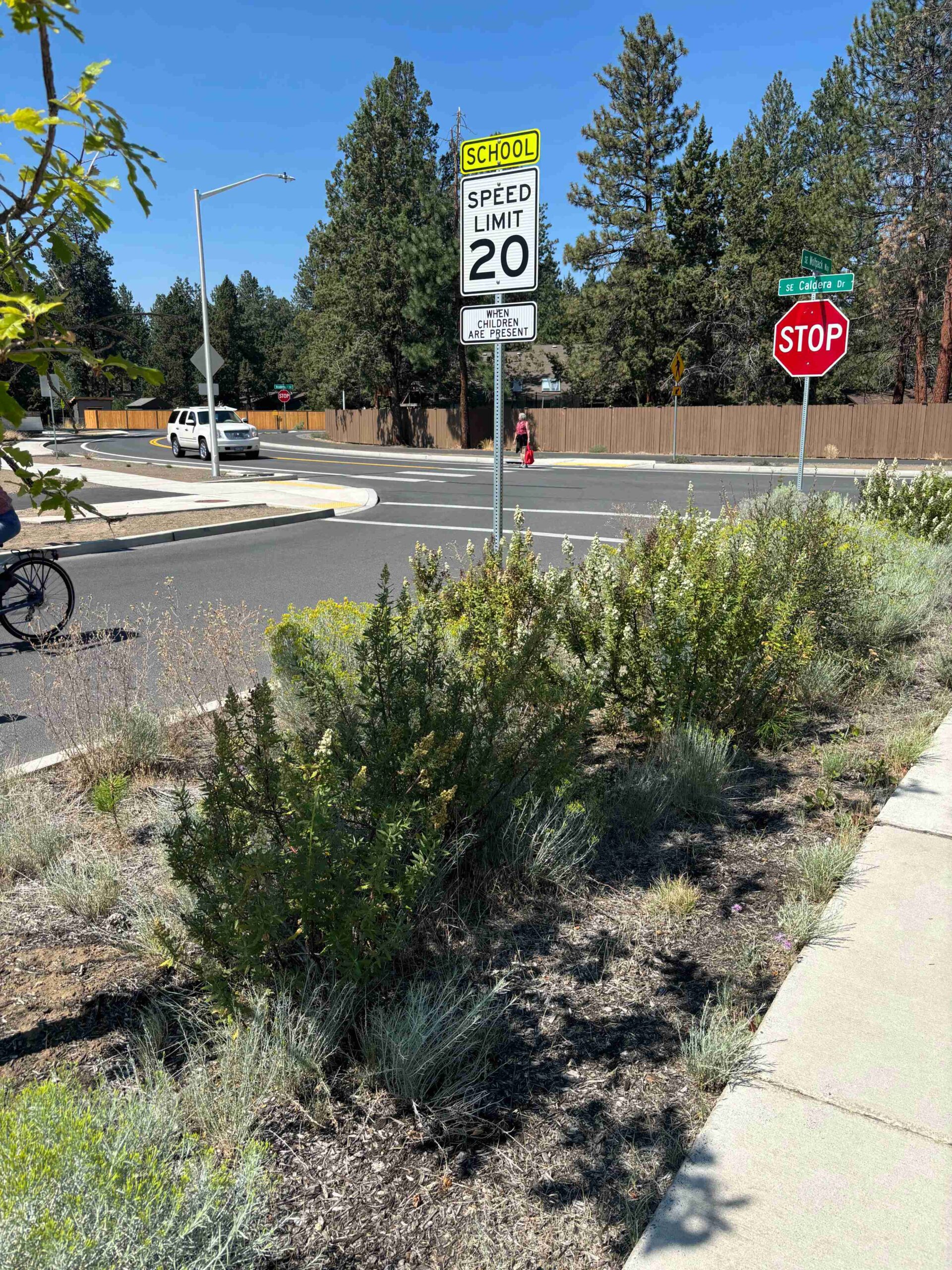
School Zones
Oregon frequently posts reduced speed limits near schools because children can move unpredictably near roads, and a split second of distraction carries real consequences, especially as students head back to campus each fall.
Downtown and Commercial Districts
These areas raise the stakes differently. More crosswalks, more signals, and more people stepping out from behind parked cars or buses mean drivers need to stay ready to stop even when the crossing looks clear at first glance, since someone can appear quickly from behind a stopped vehicle or a corner.
The stakes behind all of this are real. Traffic safety remains a serious concern in Oregon. In 2025, hundreds of people lost their lives in traffic crashes, including vulnerable road users such as people walking, biking, and rolling.
Recognizing these higher-risk areas is only half the picture. The other half is building habits that hold up everywhere, which is where the next section comes in.
Safety Habits for Drivers and People Walking
Oregon’s laws put real obligations on drivers, but people walking play a role in staying safe too.
For People Walking
- Use marked crosswalks when they’re available, and make your intent to cross clear and early.
- Stay visible, especially at dusk, dawn, or in Oregon’s frequent rain. Reflective clothing genuinely helps drivers see you sooner.
- Keep your phone down while crossing. A quick check of your surroundings matters more than a text that can wait.
For People Driving
- Slow down before you reach a crossing, not after you notice someone in it.
- Set your GPS and music before driving. Even hands-free phone use can still distract drivers from important changes happening around them. Remember, your phone can wait; don’t risk the potential for fatal crashes.
- Watch for people using e-scooters, bicycles, mobility devices, and other forms of transportation near crossings. Their speed and movement patterns may differ from people walking, so drivers should slow down, look carefully, and be prepared to yield when required.
This kind of mutual awareness is exactly the gap the Oregon Friendly Driver course was built to close. It complements required driver education and licensing programs by focusing specifically on everyday safety situations like these.
Recent Updates to Oregon’s Crosswalk Laws
What Changed
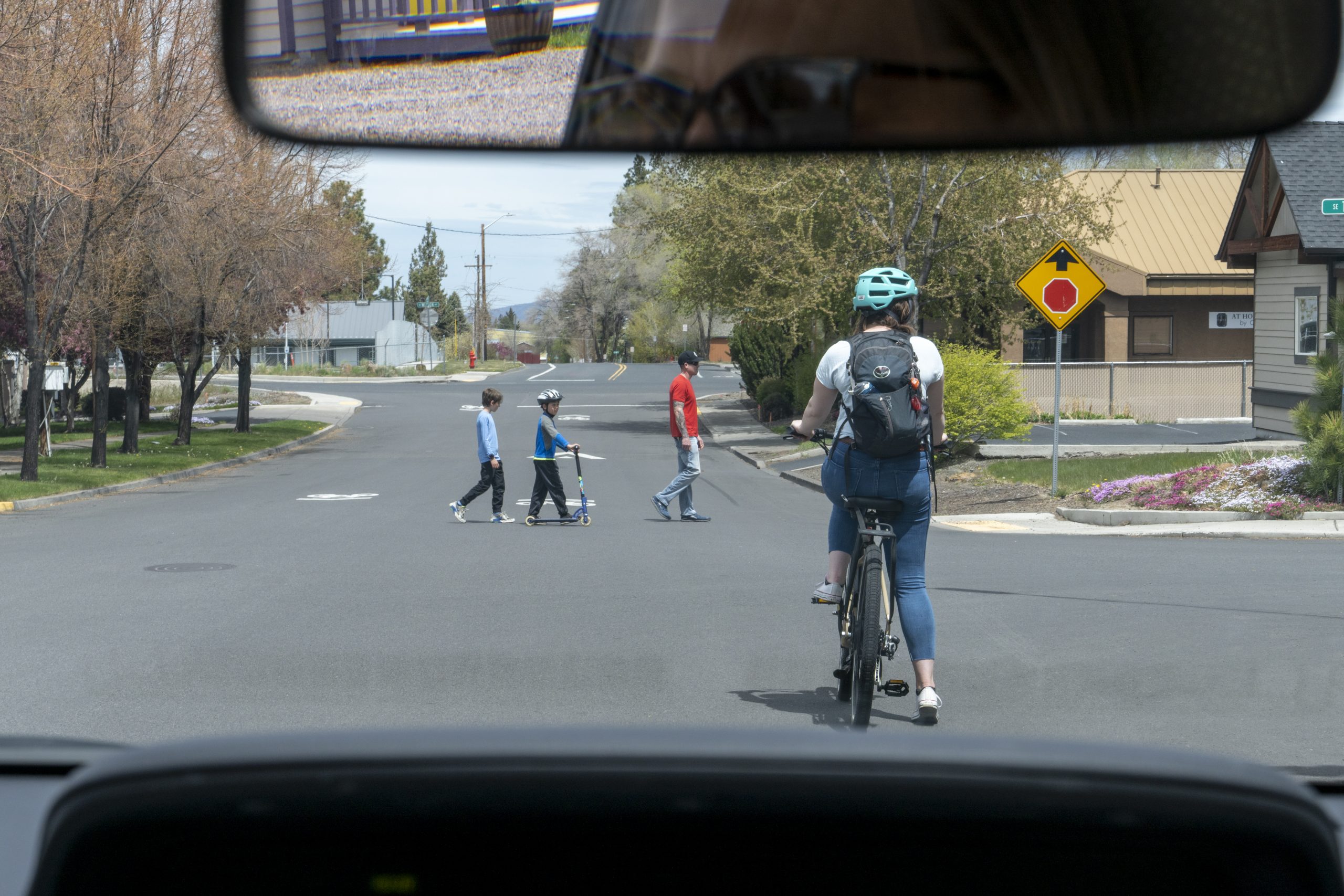
Oregon’s crosswalk laws are designed to clarify when drivers must yield and reinforce the importance of anticipating crossings before they happen. One meaningful change is that Oregon’s crosswalk laws reinforce the need for drivers to anticipate crossings, not just react after someone has already entered the roadway. Drivers should slow down, scan ahead, and be prepared to stop whenever someone is entering or crossing within a crosswalk.
Penalties for Both Sides
The penalties reflect how seriously Oregon treats this:
- A driver who fails to stop for someone in a crosswalk faces a Class B traffic violation, with fines starting above $250.
- A person walking who disregards a signal or crosses unsafely can also be cited, under a separate Class D violation, with fines starting around $120.
Neither side is exempt from responsibility. Oregon’s traffic laws recognize that everyone using the road has a responsibility to act safely, while assigning different responsibilities depending on whether someone is driving, walking, or using another form of transportation.
These updates reflect Oregon’s ongoing Vision Zero commitment to eliminating traffic deaths, and staying current on them is part of being a genuinely safe driver. This is precisely why an OFD course refresher can benefit even experienced Oregon drivers. Safe driving depends not only on knowing the rules, but also on recognizing changing road designs, traffic patterns, and the needs of everyone sharing the road.
Staying current on the law is one piece of the puzzle. Knowing who these protections are actually designed for is the other.
Turn These Crosswalk Laws Into Everyday Habits
Knowing the rules is one thing. Building the awareness to apply them at every intersection, every time, is what actually keeps people safe, and it’s exactly what the Oregon Friendly Driver course was designed to do. This free, ODOT-funded training is available to every driver in Oregon, no matter where you live, from Portland to Bend to communities in between.
Ready to put this knowledge into practice? Enroll now for free, self-paced training you can complete online.
Prefer a live session for your group, school, or workplace? Schedule a training and bring the OFD course to your organization or community.