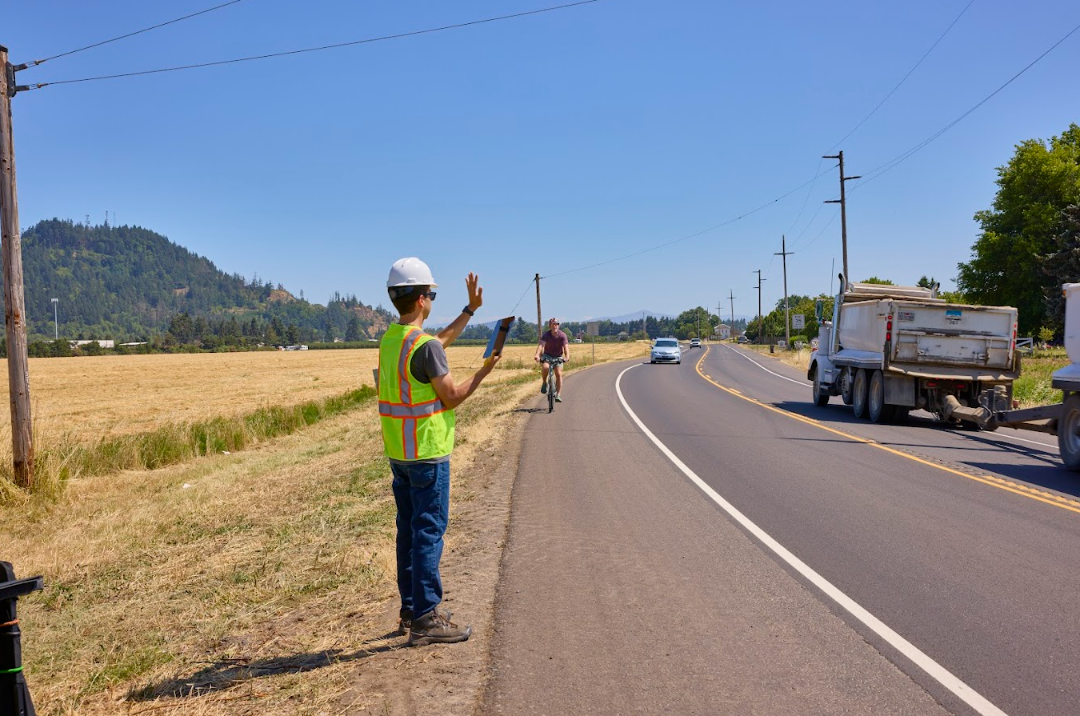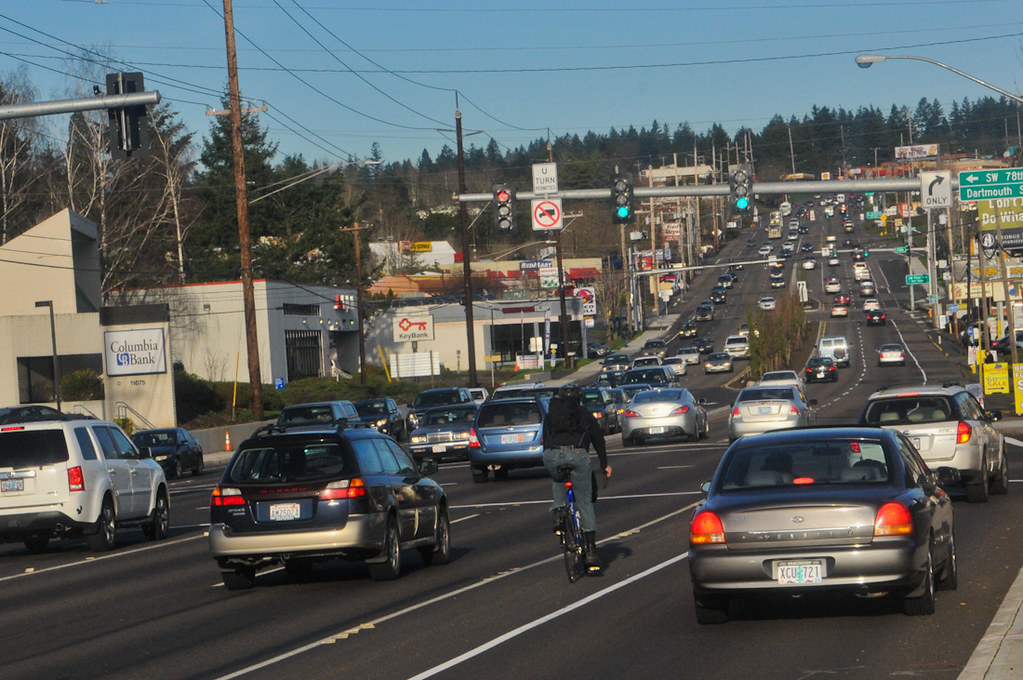
You crest a hill on a two-lane highway in Douglas County and meet a loaded log truck coming down the grade. You round a bend outside Klamath Falls and find a tractor moving at 15 mph, with a person biking on the narrow shoulder beside it. Rural Oregon roads ask more of people driving than most city streets do. Lanes may be narrower and sightlines shorter, and the people using the road travel at very different speeds.
This guide covers how to navigate rural roads safely alongside logging trucks, farm equipment, and people walking, biking, and rolling. You’ll learn how much room to give when passing, how to read a wide turn before it happens, and how to adjust your speed when you can’t see what’s ahead.
Why Rural Highway Safety in Oregon Calls for Extra Awareness
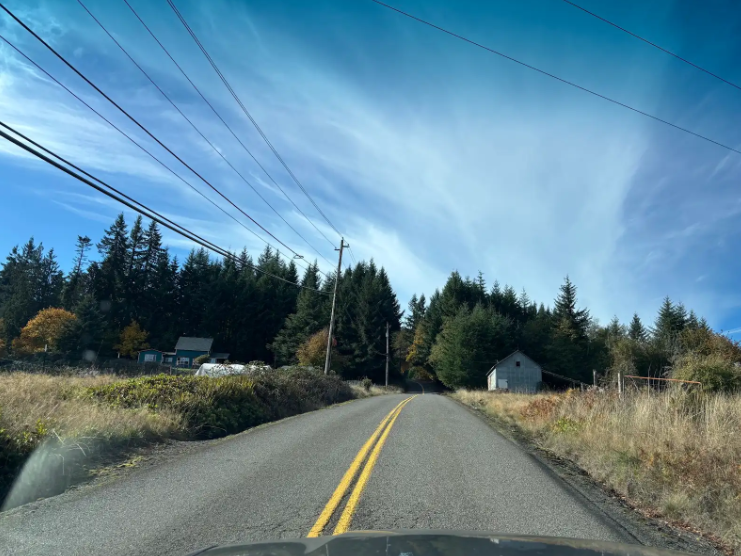
Rural roads in Oregon are working roads. In Douglas County, routes like OR-38, OR-42, and OR-138 carry log trucks between timberland and mills. In the Klamath Basin, tractors, swathers, and hay trucks move between fields on county roads and highways like OR-140 and US-97. People also bike on these roads, walk them to reach a mailbox or school bus stop, and travel them with mobility devices. Visitors use them to reach Crater Lake or the coast.
With 482 traffic fatalities recorded across Oregon in 2025, every road calls for care, and rural roads bring their own set of challenges. Statewide, 58% of fatalities and serious injuries occurred in urban areas, and 42% occurred in rural areas (data from 2019-2023).:
- Narrow lanes and little or no shoulder, so people walking, biking, and rolling often travel close to moving traffic
- Large speed differences, sometimes 40 mph or more, between passenger vehicles, farm equipment, and people bicycling or walking
- Curves, hills, and tree cover that hide what’s around the next bend
- Few streetlights and long distances to emergency care
- Fast-changing weather, from fog and heavy rain in the Umpqua Valley to ice and snow on Klamath County highways
Logging Truck and Vulnerable Road User Safety
A loaded log truck can weigh 80,000 pounds or more. That weight means it needs far more distance to stop than a passenger car, especially on a downhill grade or wet pavement. Log trucks also handle differently from other vehicles. On a turn, the trailer tracks inside the path of the cab, and the truck may need to swing wide or cross the centerline to make a tight corner.
Logging truck and vulnerable road user safety matters most where these trucks meet people walking or biking. When the person driving a log truck sees someone biking ahead, they may move toward or cross the centerline to give that person room. If you are driving in this situation and try to pass the logging truck at that moment, everyone ends up squeezed into the same space.
Practical steps when you’re near a log truck:
- Stay out of blind spots. If you can’t see the face of the person driving in the truck’s side mirror, they can’t see you.
- Leave at least four seconds of following distance, and more in rain, on gravel, or on a downhill grade.
- Hold back when a truck is passing a person biking or walking. Wait until the truck has finished passing and returned fully to its lane before you consider passing either one.
- Watch for trucks entering the highway from logging roads and mill yards, especially near curves. Slow down when you see “trucks entering” warning signs.
- Expect early-morning traffic in summer. During fire season, logging operations often shift to early hours, so log trucks may be on the road before sunrise.
If you want to know more about how professional drivers approach this, read how commercial drivers protect vulnerable road users. Log trucks are fast compared with the other large vehicles you’ll often meet on rural roads.
Farming Equipment Operators Road Safety in Oregon
People riding on tractors or other farm equipment in Oregon are considered vulnerable road users in Oregon Law and are recognized with increased legal safeguards. When driving around people operating farm equipment, there are a few key things to keep in mind to ensure everyone’s safety.
Tractors, combines, and swathers often travel at 25 mph or less. To alert people driving behind them, farm equipment displays a slow-moving vehicle emblem: a fluorescent orange triangle with a red reflective border. Many also use flashing amber lights.
The risk is how quickly you close the gap. If you’re driving 55 mph and the tractor ahead is going 15 mph, you’re approaching it at 40 mph, about 59 feet per second. A 400-foot gap disappears in roughly seven seconds. The moment you see that orange triangle, ease off the accelerator.
Farming equipment road safety in Oregon also depends on understanding how this equipment moves:
- It’s wider than it looks. Many implements are wider than a single lane and may cross the centerline or use the shoulder.
- Wide left turns often start with a move to the right. An operator may swing toward the shoulder to make room before turning left into a field. People driving behind often read this as pulling over and try to pass, which can lead to a serious crash.
- Field entrances are clues. Gates, driveways, and dirt access roads on the left side are strong signs that a left turn is coming.
- Mud and debris from fields can make pavement slick for people driving and hazardous for people biking.
Farm traffic is heaviest during spring planting and the summer and fall harvest. In the Klamath Basin, hay and potato harvests add slow equipment and loaded trucks to the roads. Large vehicles are only part of the picture, though, since the most vulnerable people on rural roads aren’t in vehicles at all.
People Walking, Biking, and Rolling on Narrow Rural Shoulders
Rural Oregon draws people biking on long-distance tours and scenic routes. Many residents also walk, bike, or use mobility devices because that’s how they get where they need to go. On roads with little or no shoulder, these vulnerable road users often travel right at the edge of the lane, or in it.
When you approach a person biking:
- Slow down early and wait behind them until you can pass with plenty of room.
- Give a wide berth when passing. On roads with a speed limit greater than 35 mph, Oregon law defines a safe passing distance as enough room that you wouldn’t hit the person biking if they fell into your lane. This is a safe rule of thumb to follow when passing a person on a bike regardless of the speed limit. On a narrow rural road, that usually means moving fully into the other lane when it’s clear.
- Never pass on a blind curve or hill crest to get around someone biking. Oncoming traffic may be just out of sight. Instead, hang back, giving the person on a bike plenty of space, and wait patiently until there’s a safe place to pass. Often times, a person on a bike will move toward the center of the travel lane in these situations as this is where they will be most visible. Always anticipate that a person may be bicycling in the travel lane when you round a corner or crest a hill.
When you approach a person walking or rolling:
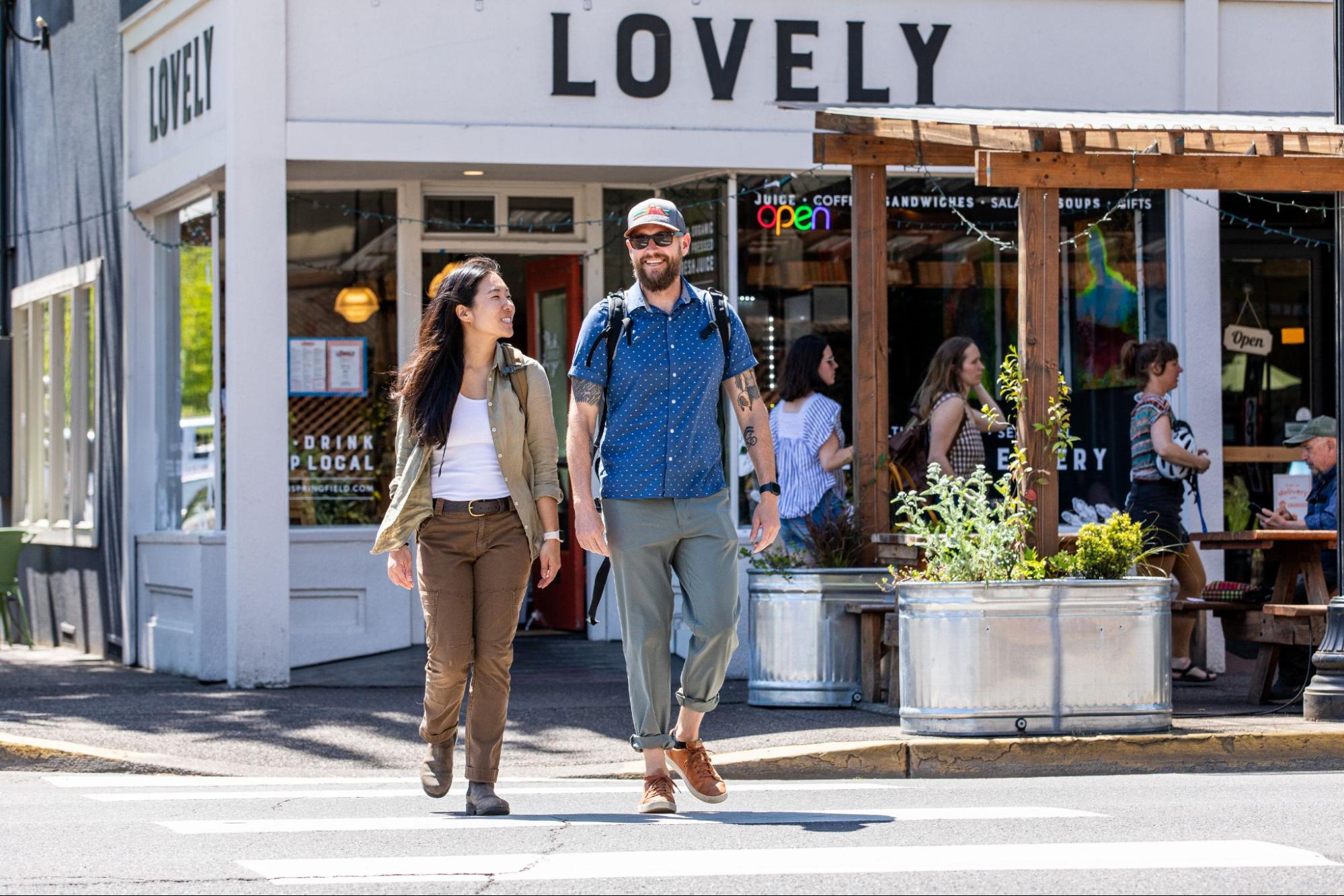
- On roads without sidewalks, Oregon law directs people walking to stay on the left side, facing traffic. Expect to see them on your side of the road when traveling in the opposite direction.
- Watch for students at rural school bus stops, often in early-morning darkness, and for students walking or biking to school, sometimes in large groups. Also look out for farmworkers walking between fields and people using wheelchairs or other mobility devices.
- Slow down and move over as far as safely possible.
For a refresher on right-of-way rules for people walking, see our full guide. All of these situations come down to one decision people driving on rural roads make again and again: when it’s safe to pass.
Passing Safely on Rural Roads
Many of the most hazardous moments on rural roads come down to one decision: whether to pass. Before you do, run through a quick check:
- Are the markings in your favor? Pass only where there’s a dashed yellow line on your side. People on bikes may be traveling in the center of the lane, especially if there is no/limited shoulder and in areas like hills, curves, and downhill stretches. This is often the safest place for them to operate (and they can be there legally). Drivers should anticipate this.
- Can you see far enough ahead? You need a clear view of oncoming traffic, with no curve or hill crest blocking it.
- Is the vehicle or person ahead about to turn? Watch for turn signals, field gates, driveways, and intersections.
- Is anyone else in the space you’ll need? A person walking, biking, or rolling on the shoulder, or a vehicle already passing, means you should wait.
If the answer to any of these is no, hold back. Slow vehicles will often use the next turnout or wide shoulder to let traffic by. Even a well-timed pass can go wrong if you’re driving too fast for the road, which brings us to speed and visibility.
Adjusting Speed for Curves, Hills, and Changing Conditions
On rural roads, the posted speed limit is the maximum for ideal conditions, not a target. Choose a speed that lets you anticipate and safely respond to whatever is ahead. A tractor, livestock, a fallen branch, or a person biking could be just past any blind curve or hill crest.
- Follow curve warning signs. Many include an advisory speed, so slow down before the curve, not in it.
- Ease off before hill crests so you have time to respond to whatever is on the other side.
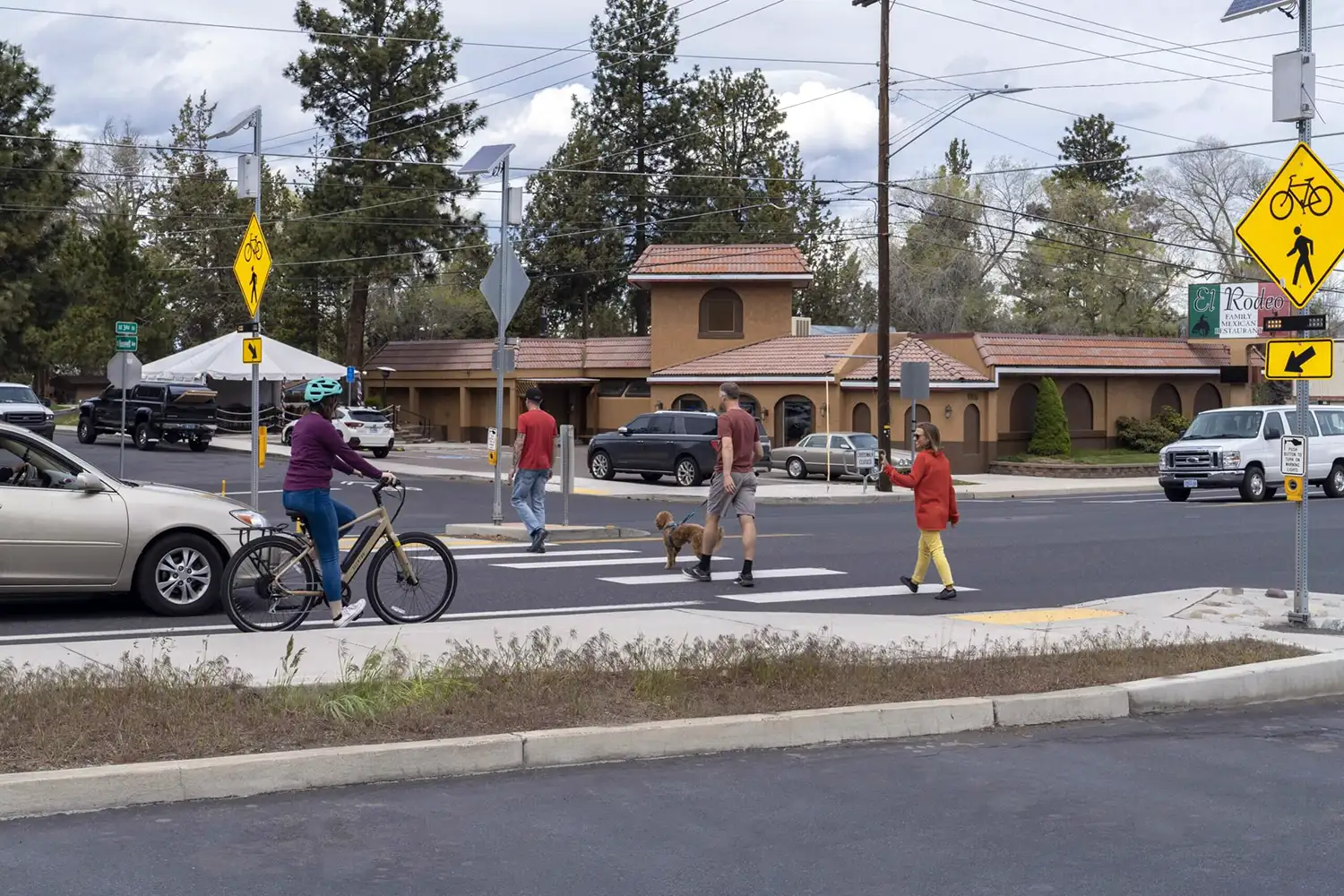
- Watch for speed drops through small towns. Rural highways often slow to 25 or 30 mph as they pass through towns like Drain and Elkton on OR-38. People cross these streets to reach shops, schools, and post offices, so expect them and slow down as soon as the limit changes.
- Adjust for weather. Fog and heavy rain are common in Oregon, and ice and snow often affect highways. Increase your following distance whenever traction or visibility drops.
- Watch for wildlife like deer and elk, especially at dawn and dusk.
- Set your GPS and music before driving. Even using hands-free options is very dangerous on roadways. Remember, your phone can wait; don’t risk the potential for fatal crashes.
Many of these habits overlap with the common driver mistakes in Oregon we see across the state. Knowing these tips is a strong start, and structured training helps turn them into everyday habits.
Safer Rural Roads, One Driver at a Time
Rural roads connect every corner of Oregon. A log truck leaving the Umpqua may end its run at a mill near Eugene. A hay truck from the Klamath Basin may pass through Medford on its way north. When you hold back behind a tractor, wait for a clear lane before passing a person biking, or slow down near a rural bus stop, other people driving notice. Your teen notices too, and so do your coworkers and neighbors. Everyone who makes these habits routine helps build a culture of safety, respect, and courtesy on the roads that link communities across Oregon, including:
- Benton County: Corvallis
- Deschutes County: Bend
- Douglas County: Roseburg
- Jackson County: Medford and Jacksonville
- Klamath County: Klamath Falls
- Lane County: Eugene, Springfield, and Junction City
- Marion County: Salem and Jefferson
- Multnomah County: Portland Metro
Drive Rural Oregon Roads with Confidence and Care
A few extra minutes behind a tractor or log truck is a small price for getting everyone home safely. That includes the person biking on the shoulder, the farmworker walking to the next field, and the student waiting at the bus stop.
The Oregon Friendly Driver Course helps make these habits second nature. It’s a free, ODOT-funded supplemental road-safety course designed to help drivers develop safer habits and share Oregon roads responsibly. It covers Oregon’s passing laws, blind-spot awareness, and anticipating the movements of people walking, biking, and rolling. It also covers micromobility, including e-scooters, e-bikes, e-skateboards, one-wheeled devices, and more. Take it online in about 75 minutes, or join a live webinar or in-person session that runs 60 to 90 minutes. Commercial drivers hauling logs, freight, or farm products can build credibility while protecting everyone on their routes. Completing the course may also qualify you for insurance discounts; check with your provider.
Enroll now in the Oregon Friendly Driver Course to start the free online training today. Managing a crew that drives rural routes? Schedule a training to bring an in-person OFD Course session to your workplace or community group in Douglas, Klamath, or any other Oregon county. A minimum of five participants is required.
Education for People-Centered Roadways.
Frequently Asked Questions
What should I know about sharing rural roads with cyclists in Oregon?
Slow down early, wait behind the person biking until the oncoming lane is clear, and give them a wide berth when you pass. At speeds over 35 mph, Oregon law requires enough room that you wouldn’t hit the person if they fell into your lane. On narrow rural roads, that usually means moving fully into the other lane.
Can I pass farm equipment in a no-passing zone in Oregon?
No, you cannot cross a solid yellow line to pass a person operating farm equipment. Wait for a legal passing zone with clear visibility, and never pass when the equipment is signaling or setting up for a turn.
Why does a tractor move to the right before turning left?
Large farm equipment needs a wide turning path. The operator may swing toward the right shoulder to make room before turning left into a field or driveway. If you see this, don’t pass. Wait until the turn is complete.
Do slow vehicles have to pull over to let traffic pass?
On two-lane highways where passing isn’t safe, Oregon law requires slow vehicles to use a turnout when five or more vehicles are lined up behind them. Operators can only pull over where it’s safe, so stay patient until they reach a suitable spot.
When are log trucks and farm equipment most active?
Farm traffic peaks during spring planting and the summer and fall harvest seasons. Log trucks travel year-round, and during fire season, logging often shifts to early morning hours, so expect trucks on the road around sunrise.
Does the OFD Course cover rural driving situations?
Yes. The course focuses on awareness of people walking, biking, and rolling, along with Oregon’s passing laws and blind-spot awareness. Those skills apply directly to rural roads, where vulnerable road users have little room and few places to go. It’s free and open to everyone who drives in Oregon.
Oregon Friendly Driver is funded by the Oregon Dept. of Transportation and administered by Commute Options. Learn more at www.OregonFriendlyDriver.org.