
When business teams get behind the wheel, it’s about more than just getting from point A to point B. It’s about keeping everyone safe and the company running smoothly.
Driving might seem routine, but a single mistake can lead to serious consequences, both for employees and the business. That’s why understanding safe driving practices isn’t just good sense; it’s a crucial part of protecting people, cutting costs, and building trust with clients.
For companies throughout Oregon, implementing effective safe driving for business teams in Oregon has become essential to maintaining competitive operations while prioritizing workforce safety.
Why Driver Safety Training Matters for Your Business
Driver safety training isn’t just another compliance checkbox. It’s a strategic investment that protects your most valuable assets: your people and your reputation.
The Financial Impact
Motor vehicle crashes impose substantial costs on employers. According to 2024 estimates, vehicle crashes cost the US economy approximately $417 billion annually. For employers specifically, motor vehicle crashes cost $72.2 billion in direct crash-related expenses, including medical care, liability, lost productivity, and property damage.
According to 2023 National Safety Council data, on a per-death basis, the cost of all motor vehicle crashes was $11,490,000. This includes one death, 54 nonfatal disabling injuries, and 214 property damage crashes.
These aren’t just numbers. They represent real business disruptions:
Interrupted service schedules and delayed deliveries
Employee absences during recovery periods
Increased insurance premiums (sometimes up to 30%)
Legal liabilities and potential settlements
Lost inventory and damaged company vehicles
Beyond the Bottom Line
Safe driving training also protects your brand reputation. Businesses known for prioritizing safety earn public trust by demonstrating responsibility, not only toward their employees but also toward the communities they serve.
When your fleet operates with fewer incidents, your brand message strengthens. You’re viewed as conscientious and professional. This influences partnership opportunities, insurance negotiations, and employee recruitment. Talented employees gravitate toward employers who emphasize safety.
The Solution: Proactive Training
The key to minimizing these risks lies in comprehensive driver safety training and education. A solid training program acts like a financial shield, catching problems early before they snowball into major incidents.
Recent research demonstrates the effectiveness of structured driver safety training. A study of more than 30,000 Massachusetts drivers found that after completing National Safety Council Online Driver Safety Training, traffic violation rates decreased up to 74% in the year following completion.
Companies that invest in ongoing driver education benefit by:
Dramatically reducing violation and crash rates
Lowering insurance premiums
Improving employee confidence and morale
Demonstrating due diligence in legal situations
Building a culture of safety and accountability
Essential Training Programs for Employee Safety
Tailored training programs do much more than check a compliance box. They build a culture where cautious, defensive driving becomes second nature for employees.
Defensive Driving Courses
Defensive driving courses are a proven way to lower crash risks substantially. Research consistently shows that structured defensive driving education significantly reduces collision rates and severity.
Employers who enroll their teams in courses like the Oregon Friendly Driver course equip workers with practical skills that directly translate into safer roads, fewer crashes, and reduced liability.
These courses emphasize techniques like:
Maintaining safe following distances
Scanning ahead for potential dangers
Controlling speed according to conditions
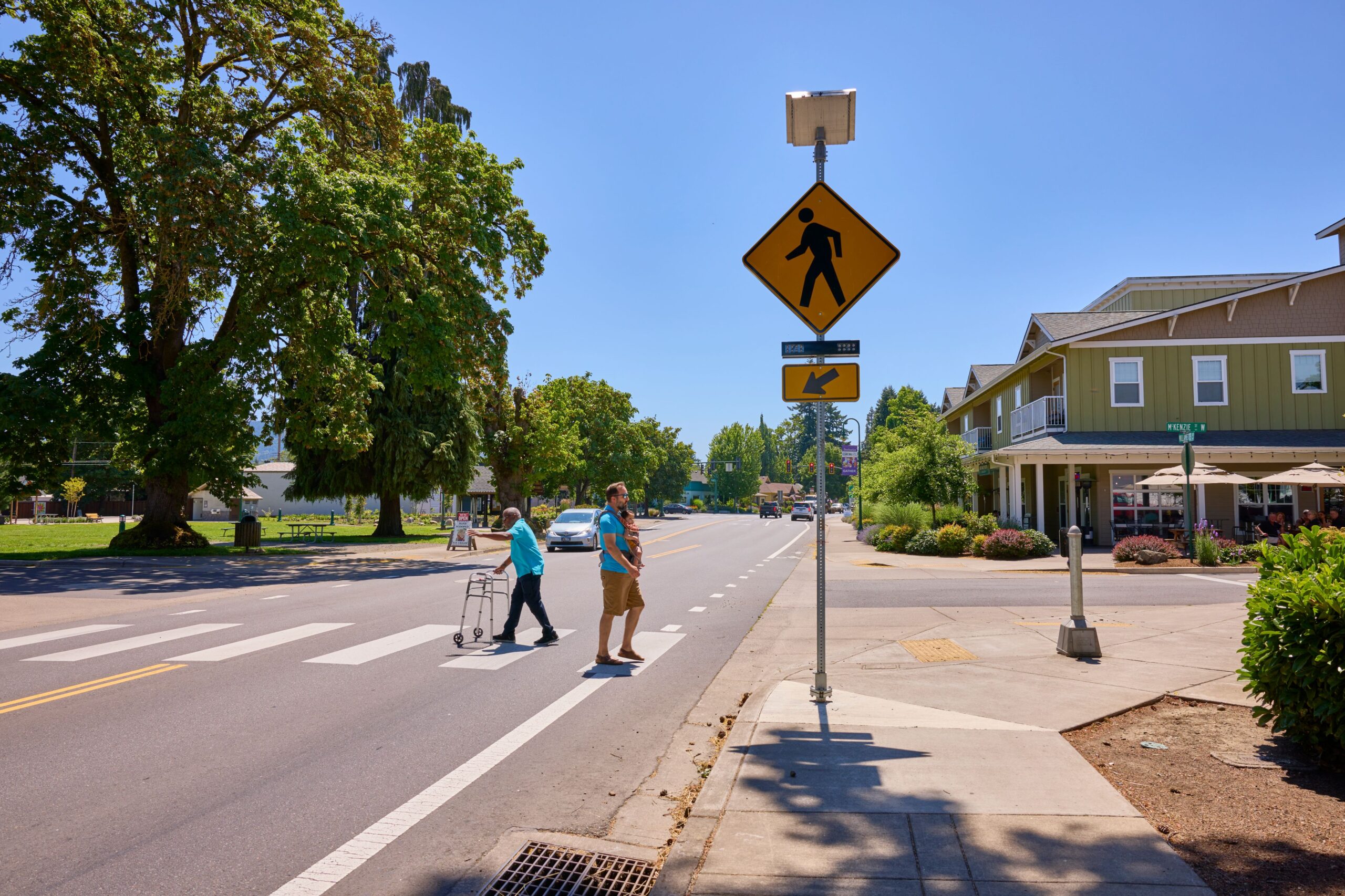
Staying alert to people walking crossing streets
Anticipating erratic behaviors of other vehicles
Understanding right-of-way rules and yielding requirements
Driving defensively isn’t about paranoia. It’s about preparation. When employees internalize this outlook through quality driver education, companies see fewer incident reports and less downtime from vehicle-related injuries.
Oregon-Specific Training
The OFD course specifically addresses Oregon’s unique driving environment, teaching people driving how to navigate safely around vulnerable road users including people walking, biking, and rolling.
This ODOT-funded training goes beyond standard driver education to emphasize awareness and respect for all road users. It covers:
Oregon’s diverse weather conditions (rain, snow, ice)
Mountain pass navigation and narrow roads
Coastal town driving with frequent pedestrian crossings
Urban traffic patterns in cities like Portland
Rural highway driving considerations
Technology-Enhanced Learning
Modern training approaches include simulator-based learning that immerses participants in realistic scenarios without any real-world risk. These sessions challenge people driving to react appropriately under pressure and adapt to rapidly changing conditions.
Technology-enhanced training allows instructors to:
Create customized scenarios based on your fleet’s routes
Identify specific areas where drivers need improvement
Track progress and measure training effectiveness
Provide objective feedback based on performance data
Ongoing Education Programs
One-time training isn’t enough. Effective programs include:
Annual refresher courses
Quarterly safety meetings
Scenario-based discussions after near-misses
Updates on new traffic laws and regulations
Seasonal training addressing weather-specific hazards
Regular touchpoints keep safety top-of-mind and allow you to address emerging issues before they become problems.
Developing Comprehensive Safety Policies
Driver safety training works best when supported by clear, comprehensive safety policies. These policies provide the framework that turns training into daily practice.
Creating Effective Policies
A well-defined safety policy acts as the roadmap for every person driving in your fleet. It sets clear expectations about what safe driving entails, ensuring every employee knows precisely what behavior is required and what consequences follow any breaches.
Consider integrating completion of the Oregon Friendly Driver course as a baseline requirement for employees who drive company vehicles. This ensures all team members receive consistent, state-specific safety education that addresses Oregon’s diverse driving conditions and vulnerable road user awareness.
Effective policies should address:
Maintaining safe speeds that allow drivers to anticipate and respond to people walking, biking, or entering the roadway
Mandatory use of seat belts for all occupants
Cellphone and device restrictions while driving
Vehicle inspection requirements
Reporting procedures for crashes and near-misses
Consequences for policy violations
Addressing Distracted Driving
One of the most critical policy areas involves distracted driving, particularly phone use.
Set clear expectations that employees should program GPS and music before driving. Even hands-free phone options create very dangerous situations on roadways due to cognitive distraction.
When people are on the phone, even hands-free, their peripheral vision decreases dramatically. This creates blind spots to vulnerable road users like people walking, biking, and rolling.
Your policy should emphasize: your phone can wait. Don’t risk the potential for fatal crashes.
The OFD course dedicates specific training modules to understanding cognitive distraction and its impact on driver awareness, helping employees recognize the real dangers of phone use while driving.
Enforcement and Accountability
Consider integrating a points-based system that tracks infractions such as:
Speeding or aggressive driving
Harsh braking or acceleration
Phone use while driving
Failure to follow Hours of Service regulations
Skipping required vehicle inspections
This approach discourages risky driving while promoting accountability without immediate punitive action. It allows room for coaching and improvement, benefiting both safety and morale.
Detail clear procedures for crash reporting and post-incident protocols. Clear steps reduce confusion during stressful situations and help management gather accurate data quickly, which is critical for insurance claims and regulatory compliance.
Employer Obligations in Promoting Road Safety

Business leaders and team managers play a crucial role in creating a culture where safety training translates into safe driving practices.
Leadership by Example
When company leaders model careful, law-abiding driving behaviors, it creates a ripple effect throughout the team. A manager who consistently adheres to hours-of-service rules and respects vehicle maintenance protocols sends a powerful message: safety matters here, every mile.
Leadership responsibilities include:
Participating in the same training programs as employees
Following all safety policies without exception
Discussing safety regularly in team meetings
Recognizing and rewarding safe driving behaviors
Taking immediate action on safety concerns
Designated Safety Officer
Many forward-thinking companies appoint a specific Safety Officer to oversee all facets of driver safety programs. This person’s job is to:
Coordinate training schedules and track completion
Engage continuously with people driving
Identify emerging risks through data analysis
Tailor training to address specific challenges
Keep practices aligned with evolving regulations
Serve as the point person for safety questions
This dedicated role ensures safety doesn’t get lost in the shuffle of daily operations.
Continuous Improvement
Driver safety training should evolve based on real-world results. Companies that regularly review incident data, near misses, or employee feedback can spot trends early. This responsiveness allows them to update policies and training before minor problems escalate.
Best practices for continuous improvement:
Monthly review of telematics data and driving records
Quarterly analysis of crash and near-miss reports
Annual assessment of training effectiveness
Regular surveys gathering driver feedback
Benchmarking against industry safety standards
Create feedback systems that allow people driving to voice safety concerns. This openness encourages early reporting of hazards, whether it’s worn tires on a fleet vehicle or fatigue issues during extended shifts.
Staying Current with Regulations
Oregon employers must stay informed about evolving regulations, from drug and alcohol testing requirements to new vehicle technology mandates. Integrating these updates into your training program demonstrates commitment to compliance and safety.
Safe Roads. Safe Workplaces.
Your team’s safety on Oregon’s roads starts with the right training and commitment to excellence. Don’t wait for a crash to highlight the gaps in your driver safety program.
Oregon Friendly Driver offers comprehensive, Oregon-specific driver education designed for business teams throughout the state. From Portland to Pendleton, from the coast to Central Oregon, we help companies build safer, more confident driving cultures.
Enroll now in the OFD Course or schedule a training session for your team. Take advantage of free online courses, live webinars, and in-person classes.
Explore potential insurance discounts while building a culture of safety, respect, and awareness.
Contact Oregon Friendly Driver today and invest in the safety solution that protects your people and your bottom line.